Novel Effect: Read Aloud Books
Novel Effect Inc.Education
4.1224.00 Reviews
- Version
- 4.2.5
- Installs
- 100.00K
- Age Rating
- Everyone
Screenshots
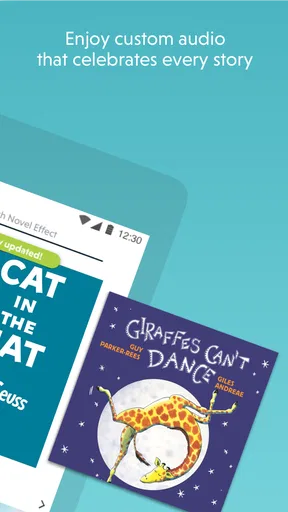
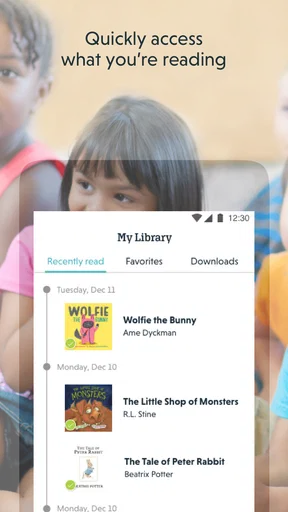
Our Review of Novel Effect: Read Aloud Books
 Analysis by Appyee
I found Novel Effect: Read Aloud Books most interesting when I stopped treating it like another children’s reading app and used it as a shared activity. Instead of asking a child to stare at a screen alone, it is designed to add interactive responses to reading aloud. That changes the role of the phone or tablet: the adult still does the reading, while the app helps make the story feel more active.
That distinction matters. Many education apps try to keep children busy with taps, quizzes, animations, or short lessons. This one is better understood as a companion for story time. I would recommend it to parents, grandparents, teachers, and caregivers who already enjoy reading aloud and want an extra layer of participation. I would not choose it as a replacement for books, a complete literacy course, or a quiet reading tool for older independent readers.
How Novel Effect fits into real reading time
Novel Effect comes from Novel Effect Inc. and sits in the education category. Its central appeal is simple to explain: you read a supported story aloud, and the app reacts as the reading progresses. In practice, that means the adult remains part of the experience instead of handing the whole session over to a device.
I like that arrangement because it preserves the most valuable part of reading with a young child: conversation. You can pause to ask what might happen next, explain an unfamiliar word, or let the child point at an illustration without abandoning the activity. The interactive layer is there to support the moment, not to turn the adult into a spectator.
The app is free to install, and it is marked for Everyone. That makes it easy to try without committing money at the start. However, the free entry point should not be confused with unlimited free access. In-app purchases range from $0.99 to $59.99 per item, so families should look at the available content and purchase choices inside the app before assuming that every story or feature is included.
That pricing detail is the first practical question I would raise with a family. If you only want to test the reading experience, the free starting point lowers the risk. If you expect to build a large, regular library, the possible higher-priced items make it important to decide what “good value” means for your household. The app itself does not automatically become a bargain simply because downloading it costs nothing.
At the time of writing, the listed release is version 4.2.5, with Android support beginning at version 8.1. The app has passed the early-experiment stage: it shows over 100K installs, an average rating of 4.1, and 994 ratings. Those figures suggest that people are using it as a real reading companion, although they are not a guarantee that every device, book, or family routine will feel equally smooth.
The best way to use it at home
My preferred setup is deliberately low-pressure. I would choose one book before the child sits down, place the phone or tablet where both people can see it, and keep the physical book central. The adult reads at a natural pace rather than rushing to trigger the next response. If the child becomes more interested in the device than the story, I would move the screen farther away and treat the sounds or reactions as background support.
A realistic evening example would be a parent returning home with limited energy but still wanting a meaningful bedtime routine. The parent selects a familiar picture book, opens the app, and reads while the child watches the pages. When the app responds, the child gets a small surprise and the parent can continue the conversation: “Why do you think that happened?” This works best when the technology gives the story momentum without becoming the main event.
There is also a useful role for repetition. Young children often want the same book again and again, and an interactive response can give the adult a reason to revisit a familiar story without changing the basic reading task. On the second or third reading, I would focus less on the novelty and more on vocabulary, prediction, and asking the child to retell a scene.
One non-obvious benefit is that the app can help adults who feel unsure about making read-aloud time lively. Not every caregiver is comfortable with character voices or dramatic sound effects. The interactive layer can provide some atmosphere while the adult concentrates on clear pronunciation and questions. It does not remove the need for warmth, but it can reduce the pressure to perform.
What it adds beyond an ordinary picture book
The strongest value is not simply that the app makes noises. It creates timing around the act of reading. A child who normally loses interest after a few pages may have another reason to listen for what comes next. That can be useful during shared reading with children who need a little more encouragement to stay with a story.
It can also make a group session more engaging. In a classroom, library corner, or playgroup, one adult can read while several children watch the illustrations and react together. The app does not replace discussion, but it can give the group a common event to notice. I would still keep the group small enough that every child can see the book and participate.
Another practical insight is that the adult should treat the interactive moments as prompts, not commands. If a response arrives while a child is asking a thoughtful question, I would ignore the interruption and finish the conversation. The educational value comes from the exchange between reader and child, not from perfectly synchronizing every reaction.
This is where it compares favorably with many standard educational apps. A typical phonics or vocabulary app may offer clearer practice goals, immediate answers, and measurable exercises. Novel Effect offers a more social experience, but less direct instruction. If your priority is letter recognition, spelling practice, or independent progress tracking, a dedicated literacy app is likely the better tool. If your priority is making shared stories more inviting, this approach feels more natural.
It also differs from audiobooks. An audiobook lets the child listen while the adult does something else, which is convenient for travel or quiet time. Here, the adult’s voice remains essential. That makes it less convenient, but potentially more valuable for language development and family connection because the reader can adjust the pace and respond to the child.
Where the experience can become frustrating
The biggest trade-off is dependence on a particular reading routine. You need the book, a compatible experience, a suitable device, and an adult willing to read aloud. That is not a flaw in itself, but it means the app is not a one-tap solution for keeping a child occupied. Families looking for something a child can use alone may find the setup too demanding.
Screen placement also requires thought. Put the device too close and the child may focus on the display rather than the illustrations or the reader. Put it too far away and the interactive layer may lose its appeal. I would test the position before starting, especially with more than one child, because a poor viewing angle can turn a calm story into an argument.
Timing is another trade-off. Reading aloud is not always perfectly predictable: children interrupt, skip pages, repeat lines, or turn pages early. An app built around story progress may feel less natural when the child wants to improvise. My solution would be to use the interactive mode for a planned reading, then read the same book normally when the child wants to explore it freely.
Parents should also be realistic about purchases. The free installation makes experimentation sensible, but the range of individual purchase prices means the long-term cost depends on what you choose. I would not buy several items immediately. First, see whether the child actually listens, whether the adult enjoys the routine, and whether the available stories fit your family’s interests.
There is a further limitation for older children who have already moved toward independent reading. The app’s core strength is the shared read-aloud relationship, so it may feel too young or too guided for a confident reader who wants chapter books, silent reading, or more challenging comprehension work. In that situation, a regular ebook, library book, or structured reading program would probably offer more value.
Small workflow changes that improve the results
I would create a short routine rather than opening the app whenever a child is restless. For example, use it during one planned story session, keep the physical book ready, and end with a question about the plot. This gives the experience a clear purpose and prevents it from becoming background noise.
It is also worth choosing the reader carefully. A child may respond differently to a parent, grandparent, teacher, or older sibling, and the app can work as a bridge between them. A grandparent reading remotely or a caregiver sharing a familiar book can use the interactive layer to make the session feel more eventful, while still relying on the human voice.
For language learning, I would slow down rather than repeat the app’s reactions. Pause after an unfamiliar word, explain it in simple language, and ask the child to find something in the picture. The app can hold attention, but the adult has to turn that attention into understanding. This is an important distinction from a lesson app that directly teaches and tests vocabulary.
For a child who becomes overstimulated, I would begin with a familiar story and keep the volume modest. If the interactive responses distract from the narrative, switch back to ordinary reading. The best result is not the most animated session; it is the session in which the child stays connected to the story and the person reading it.
Who will get the most from the free starting point?
I see the clearest fit for families with young children who already own or borrow picture books and want to make read-aloud time more engaging. It is especially appealing when an adult wants participation rather than passive screen time. Teachers and caregivers may also appreciate it as a change of pace for a small reading group, provided they can manage the device and keep the book visible.
It may be worthwhile for a child who resists reading but enjoys sound, surprise, and shared attention. The app can act as an invitation to listen. That does not mean it will solve every reading reluctance, and I would not use it to pressure a child who is tired or frustrated. Its value is highest when the interactive element feels like a reward inside a pleasant routine.
I would be more cautious if your main goal is independent learning. Children who need systematic phonics, handwriting practice, spelling feedback, or progress reports should look at tools built specifically for those outcomes. Novel Effect is closer to an enhanced storytelling aid than a complete curriculum.
It is also not my first choice for someone who dislikes in-app purchasing models. Because the app is free to begin but includes items from $0.99 up to $59.99, you need to be comfortable reviewing purchase decisions yourself. The sensible approach is to explore first and spend only when a particular addition clearly earns a place in your reading routine.
My verdict on whether to try it
I would try Novel Effect if I wanted to strengthen shared reading without replacing the book or the adult’s role. The free entry point makes that trial practical, and the Everyone rating makes it suitable for a broad family audience. Its average rating of 4.1 from 994 ratings is encouraging, while the total of over 100K installs shows that it has found an audience beyond a handful of early testers.
My recommendation comes with a clear condition: judge it by the quality of the reading time it creates, not by how many reactions the screen produces. When the adult reads, pauses, asks questions, and lets the child lead parts of the conversation, the app has a genuine educational and emotional use. When it is left running as a substitute for attention, much of its advantage disappears.
I would skip it if you want a fully independent children’s app, a formal literacy course, or a predictable audiobook experience. I would also avoid buying a large amount of content before confirming that the child enjoys the format. For everyone else, the sensible path is to start free, test one or two ordinary reading sessions, and then decide whether any paid item adds enough value to justify its cost.
In my experience, the most convincing reason to keep it installed is not novelty. It is the way the app can help an adult turn an ordinary book into a shared event while leaving room for questions, jokes, repetition, and imagination. Its real value is as a bridge between technology and human reading time, and that is a narrower promise than a complete education platform—but also a more believable one.
Verdict
Strengths of Novel Effect: Read Aloud Books
- Makes shared reading more interactive with playful audio effects.
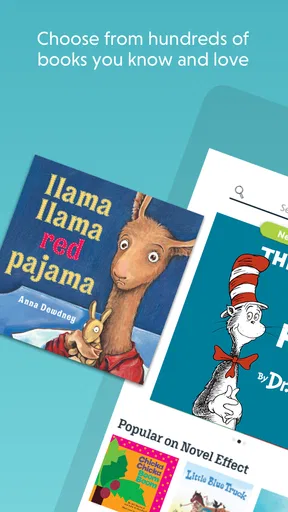
- Works with many popular children’s books and familiar stories.
- Encourages children to listen, follow along, and participate.
- Simple setup for parents, teachers, and caregivers.
- Can make repeated storytime sessions feel fresh and engaging.
Limitations of Novel Effect: Read Aloud Books
- Requires a compatible physical book for the full experience.
- Some titles and features may require in-app purchases.
- Audio effects can occasionally distract from the story.
- Performance depends on clear reading and a quiet environment.
- The catalog may vary by region and supported language.
Similar Picks in This Category
View All
Duolingo: Language Lessons
Duolingo4.7

Google Classroom
Google LLC2.8

Unacademy: Learn & Crack Exams
Unacademy3.2

Bible App for Kids
Life.Church4.4

Cake - Learn English & Korean
Cake Corp.4.7

Brainly: AI Homework Helper
Brainly4.5
Frequently Asked Questions
What is Novel Effect: Read Aloud Books?
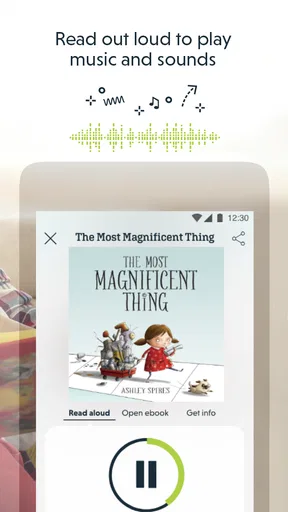
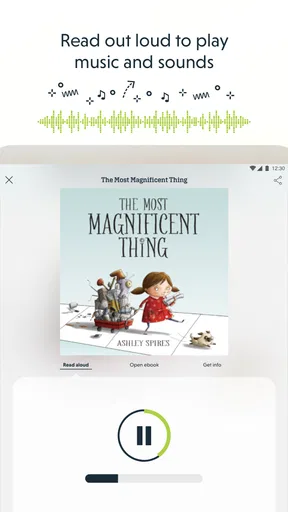
Novel Effect is an interactive reading companion designed to make shared story time more engaging. It listens while you read selected children’s books aloud and responds with music, sound effects, character voices, and other audio moments that match the story. The app is intended for parents, caregivers, teachers, and children, although supported titles and features may vary by platform or region.
How does Novel Effect work while reading a book?
After opening the app, you choose a compatible story and follow the on-screen instructions to begin reading. Novel Effect uses your device’s microphone to recognize parts of your spoken reading and trigger synchronized audio. You normally do not need to read every word perfectly, but a quiet environment, clear speech, and keeping the phone or tablet reasonably close can help the effects play at the right moments.
Do I need a physical book to use Novel Effect?
For many experiences, Novel Effect is designed to accompany a physical copy of a supported children’s book, so you can read the pages while the app provides audio reactions. Availability depends on the title library and the edition you own. Some content may offer digital or alternative reading options, but users should check the app’s current catalog before assuming that every book works without a physical copy.
Is Novel Effect free to download, and does it include in-app purchases?
The app may be available to download at no initial cost, but access to its complete collection can depend on subscriptions, purchases, promotional offers, or specific supported titles. Pricing and included content can change over time and may differ between Android and iOS. Before downloading or subscribing, review the current store listing, trial terms, renewal conditions, and cancellation instructions to avoid unexpected charges.
Is Novel Effect suitable and safe for young children?
Novel Effect is primarily built around family reading and children’s stories, making it useful for shared sessions with a parent, teacher, or caregiver. However, adults should supervise setup, account management, microphone permissions, and any purchases. Because the app listens for spoken reading, review its privacy information and device permissions, and avoid using it in situations where background conversations or sensitive audio could be unintentionally captured.
